FREE K-12 AI LITERACY COURSES FOR THE 26-27 SY! Learn more here.
- Course Summary
- Course Outline
- Standard Alignment
- Course Project
Students with a good grasp of basic Python concepts such as variables, conditionals, and variable types will enjoy this course. Advanced Python explores manipulating lists and organizing data into different formats such as dictionaries and tuples. Students learn to read from and write to files and learn about sequential file structures. They also learn the basics of object oriented programming and how to create instances and classes. They learn different sorting techniques and discover recursion.
-
CP2 Unit 1
Learning Outcomes:
Students will build foundational Python programming skills by learning how to work with strings, debugging techniques, lists, loops, functions, and basic programming concepts. They will practice problem-solving through projects and begin understanding how programming languages function and evolve. By the end of the unit, students will be able to write programs using loops and functions, manipulate data with lists and strings, and debug common coding errors.
Lessons:
- Project: Nicco’s Pizza
- Project: Leap Year
- String Methods
- Error Messages & Debugging
- String Methods Continued
- Programming Languages
- Lists
- History of Computer Science Timeline
- Python For Loops
- Python Functions
- Python Function Parameters
- Python While Loops
-
CP2 Unit 2
Learning Outcomes:
Students will expand their Python knowledge by working with more advanced data structures and programming logic. They will learn how to manipulate lists and dictionaries, use loops with conditional logic, create reusable functions with multiple parameters, and explore tuples, sets, and lambda functions. Students will also strengthen their testing and debugging skills while completing applied programming projects.
Lessons:
- Python 2 Project: Prime Number Calculator
- Printing Specifics in Python
- If Statement in a For Loop
- Python Accessing Items in a List
- Using Integers from a List
- Adding to Lists in Python
- Removing from Lists in Python
- Python Lists Continued
- Testing Code
- Generator and Lambda Functions
- Multiple Parameters in Python Functions
- Python Dictionaries
- Adding to and Removing from Dictionaries
- Dictionaries Continued
- Looping Through a Dictionary
- Looping Through a Dictionary Continued
- Tuples
- Python 2 Project: Factorials
- Sets
-
CP2 Unit 3
Learning Outcomes:
Students will apply intermediate and advanced programming concepts through file handling, recursion, sorting algorithms, object-oriented programming, and data structures. They will learn how to read and write files, work with multidimensional lists, use Python libraries and modules, and understand common computer science algorithms. Students will also explore professional skills related to interviewing and workplace readiness while continuing to strengthen computational thinking and coding proficiency.
Lessons:
- Reading Files
- Reading Parts of a File
- Append a Line to a Text File
- File Write Mode
- Nested For Loops
- Multi-dimensional Lists
- Iterating through 2D Lists
- Recursion
- Recursion vs Iteration
- Bubble Sort
- Python Random
- Selection Sort
- Python Math Library
- Insertion Sort
- Python Datetime
- Merge Sort
- Modules & Packages
- Object-Oriented Programming
- Creating an Instance/Object
- Objects Continued
- Super Classes
- Interviewing Basics
- Dress for Success
- Data Structures
-
CP2 Careers in Tech
Learning Outcomes:
Students will explore core foundational tech and engineering roles, understanding how infrastructure, software architecture, and team dynamics drive modern technology platforms. They will learn how software engineers collaborate with specialized system managers and database experts to build scalable, secure applications. By the end of the unit, students will be able to distinguish between different software development life cycle (SDLC) methodologies and understand the core responsibilities of fundamental engineering teams.
Lessons:
- Team Members in Tech
- Software Engineer
- Computer Systems Manager
- Database Administrator
- Network Analyst
- Video Game Developer
- Bioinformatic Scientist
- Drone Software Engineer
- Computer Science Teacher
- Virtual Reality Specialist
- Hardware Engineer
- Web Developer
- Information Security Analyst
- Health Information Technician
- Data Scientist
- Software Tester
- App Developer
- Artificial Intelligence Specialist
- Ethical Hacker
- Web Designer
- Agricultural Engineer
- Marine Scientist
- Food Scientist
- Ecologist
- Climatologist
- Biometrician
- Remote Sensing Specialist
Download the 2022 Skill Struck Standards Alignment + Correlation Guide to view a general list of our standard alignments, or find your state's specific alignment below:
Computer Programming 2
In this course students will complete challenges that help solidify concepts as they use skills in a variety of ways. In order to complete tasks, students will creatively apply what they've learned by using different approaches to reach a goal. This experience closely follows challenges they would face in a technical interview, allowing them to practice. Some examples of projects: Add the Factorials, Prime Number Calculator, Shopping, Custom Greeting Cards, Pollinating Bees
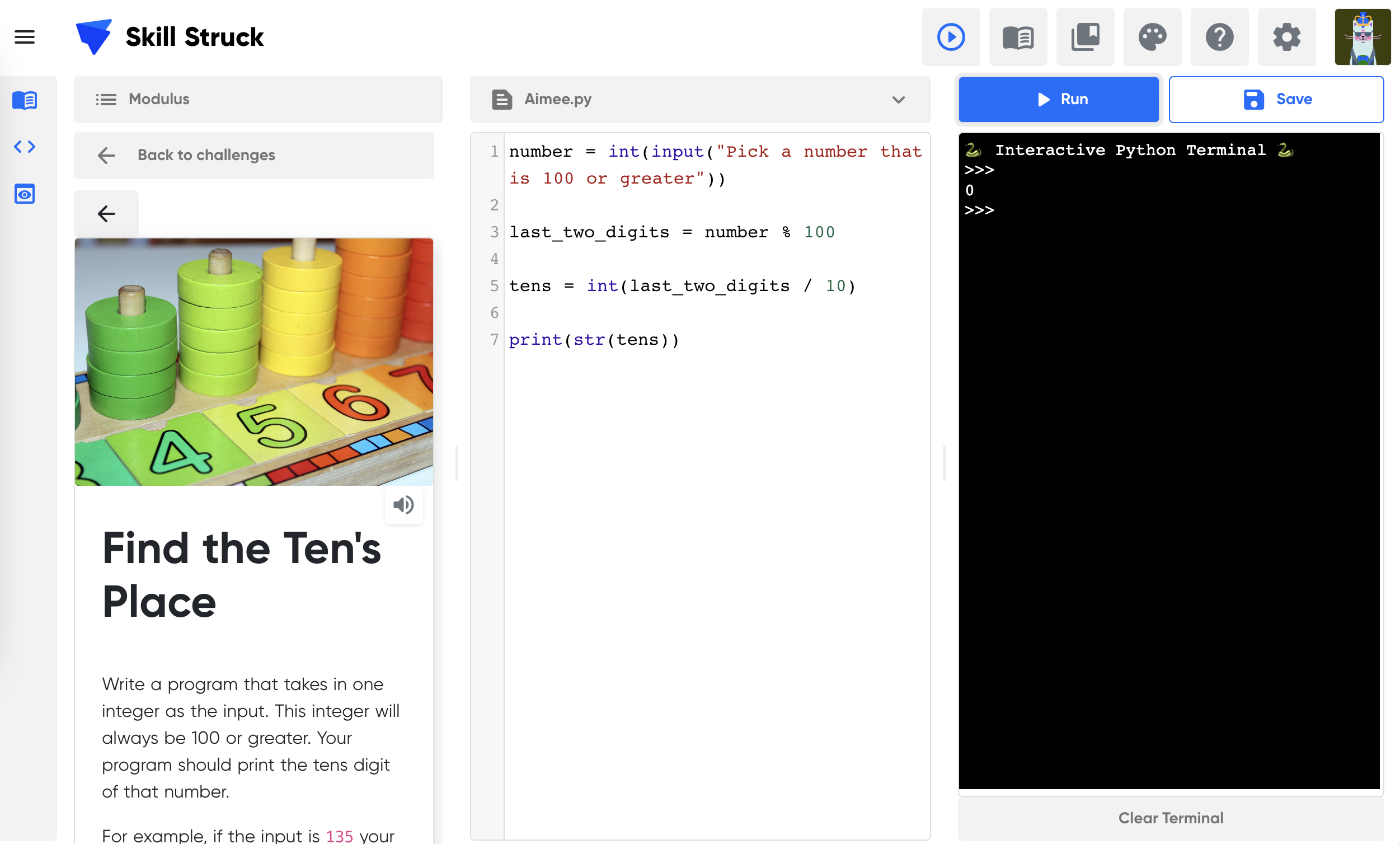
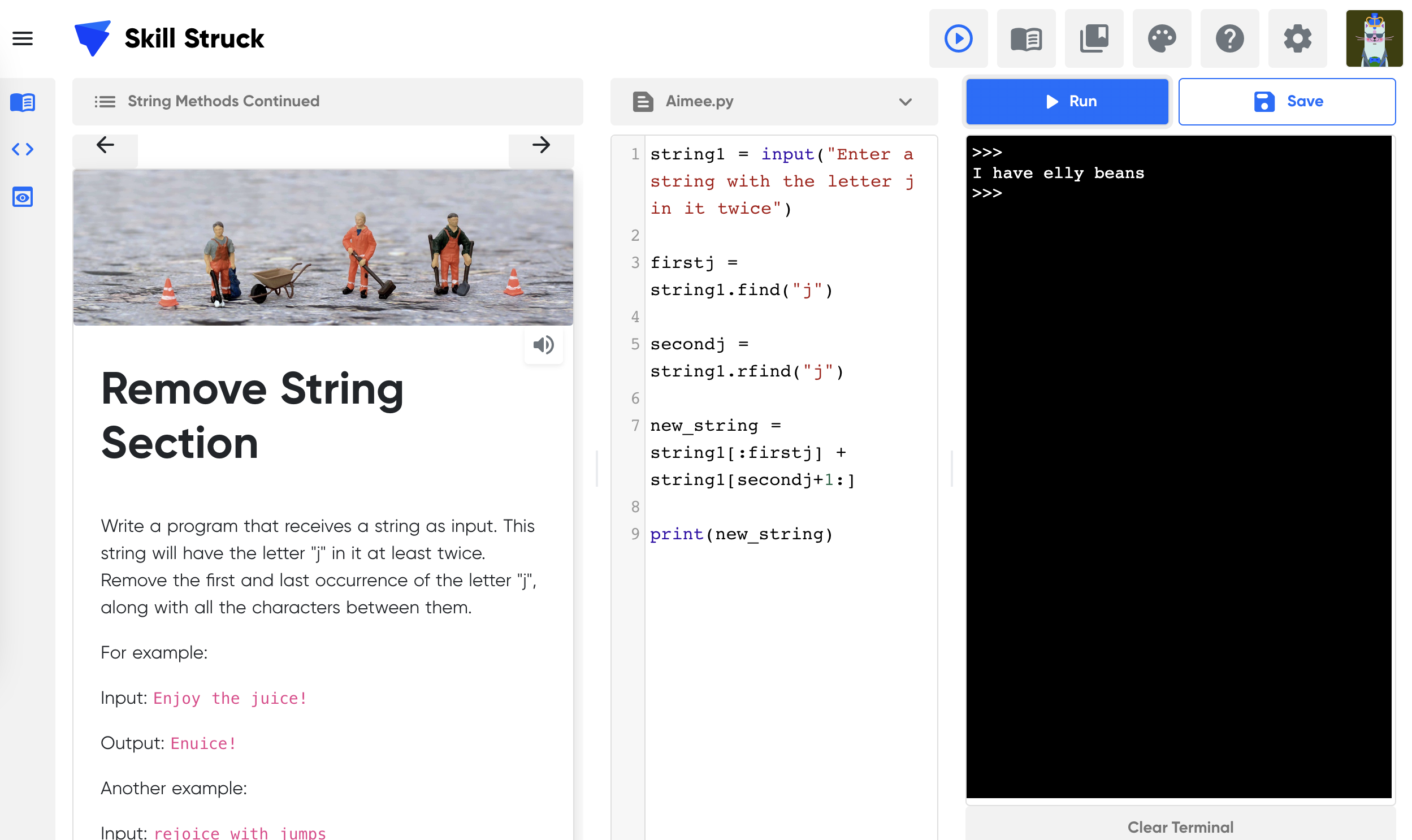
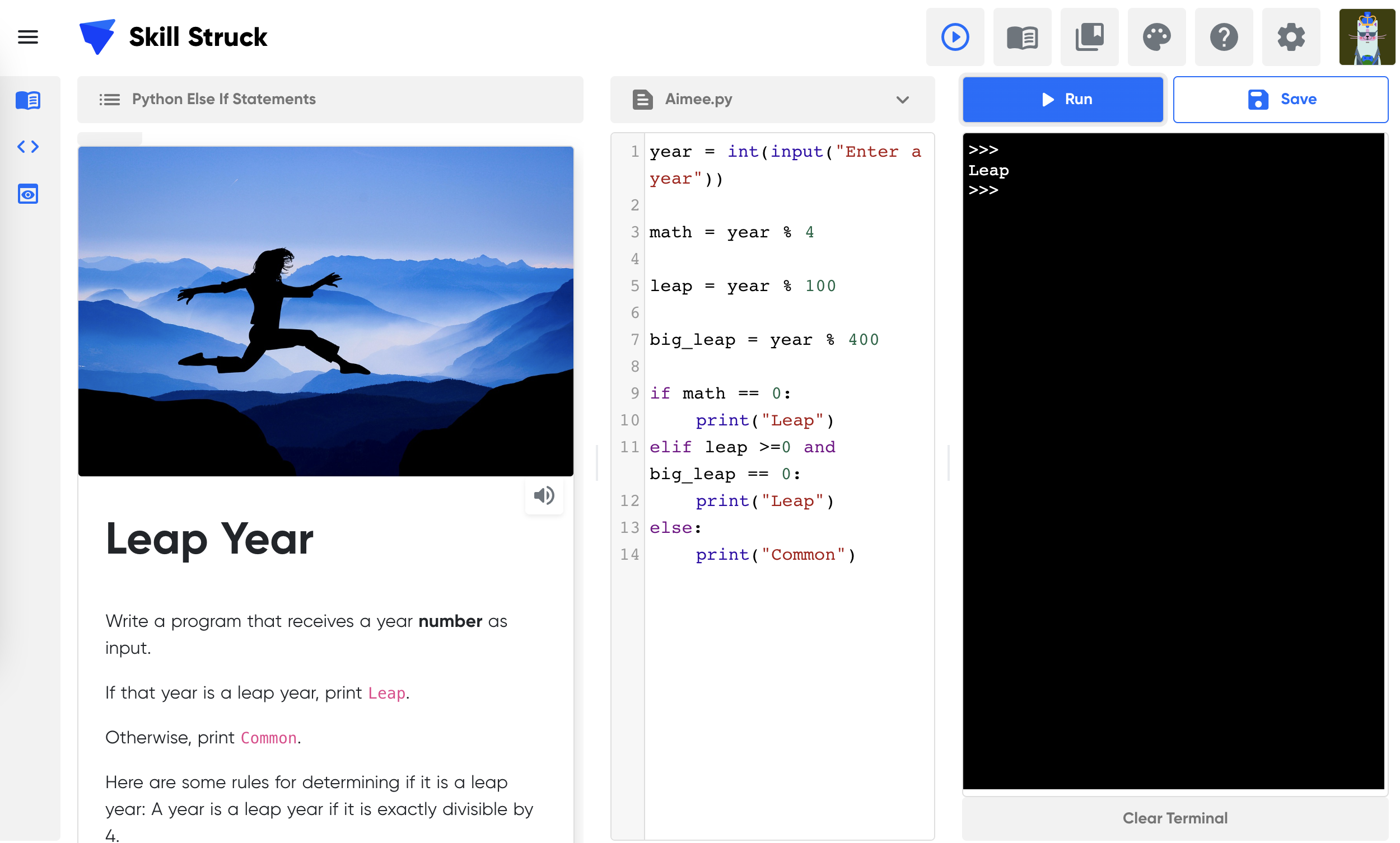
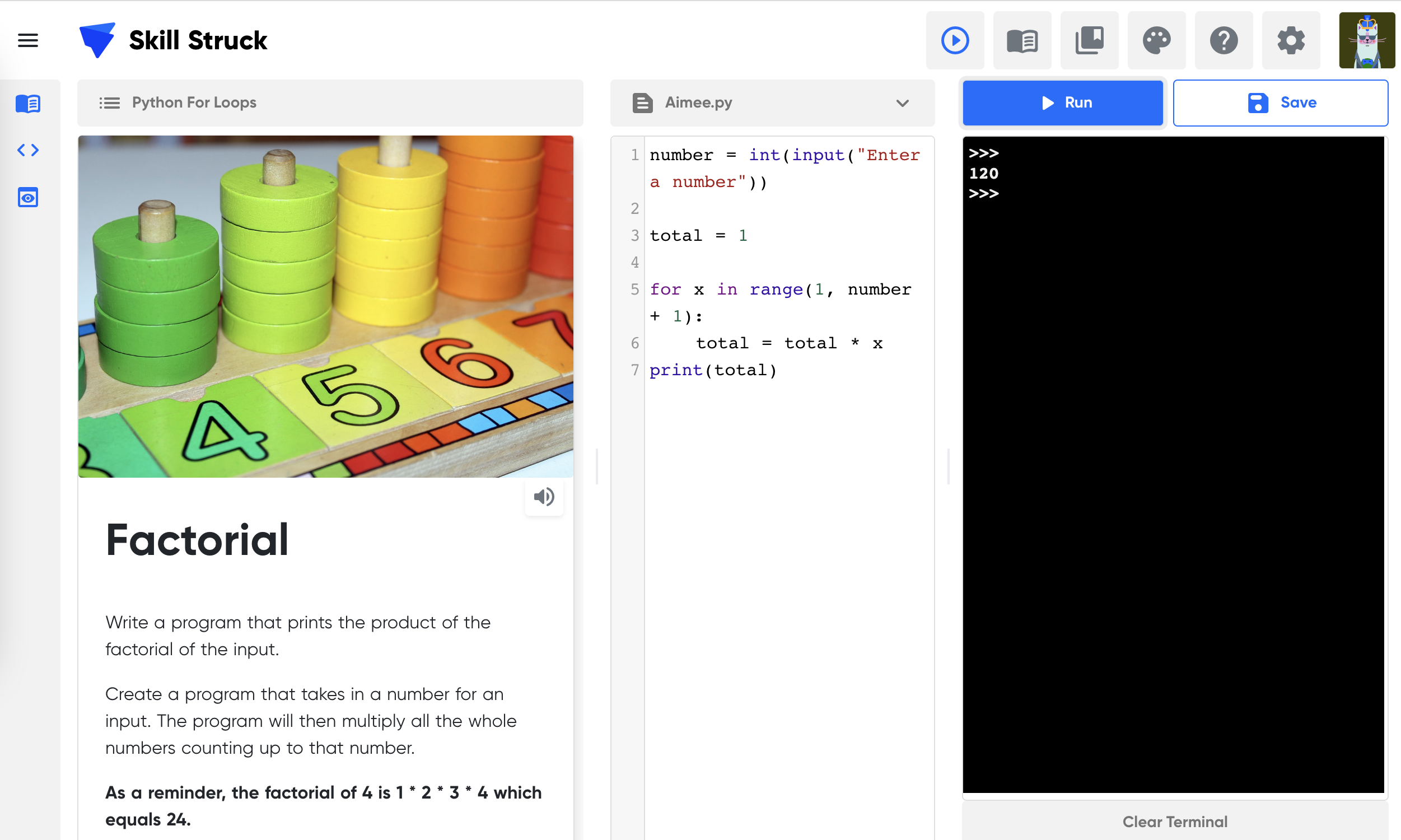
Projects in this course include: Find the Tens Place, Remove String Section, Leap Year, Factorial, and Halloween Candy Count
 119 Student Activities
 153 Teacher Resources
 29 Checkpoints
 1 Pre/Post Test
-
 164 Quiz Questions
  Autograder
 English and Spanish
Skill Struck Reviews

Having a mapped out, structured way to learn and experience the Computer Science curriculum really freed up time for me to give students one-on-one attention. It also gave me more opportunities to give the students additional programming assignments to help them understand the concepts better.
Scott Couch
CS Teacher, Maeser Prep Academy
The program and the people behind it are innovative, intelligent, and organized. The platform is very user-friendly and l have been able to guide my students easily through the curriculum.
Dillon Gilpin
High School CS Teacher, Duchesne County School District
All of the content is fun and engaging for our students! Regarding the support and partnership, they are always on top of everything. Small issues are resolved quickly, and that is not typical with other EdTech companies.
Donna Woods
CTE Cyber Pathway Instructor, Moreno Valley United School District